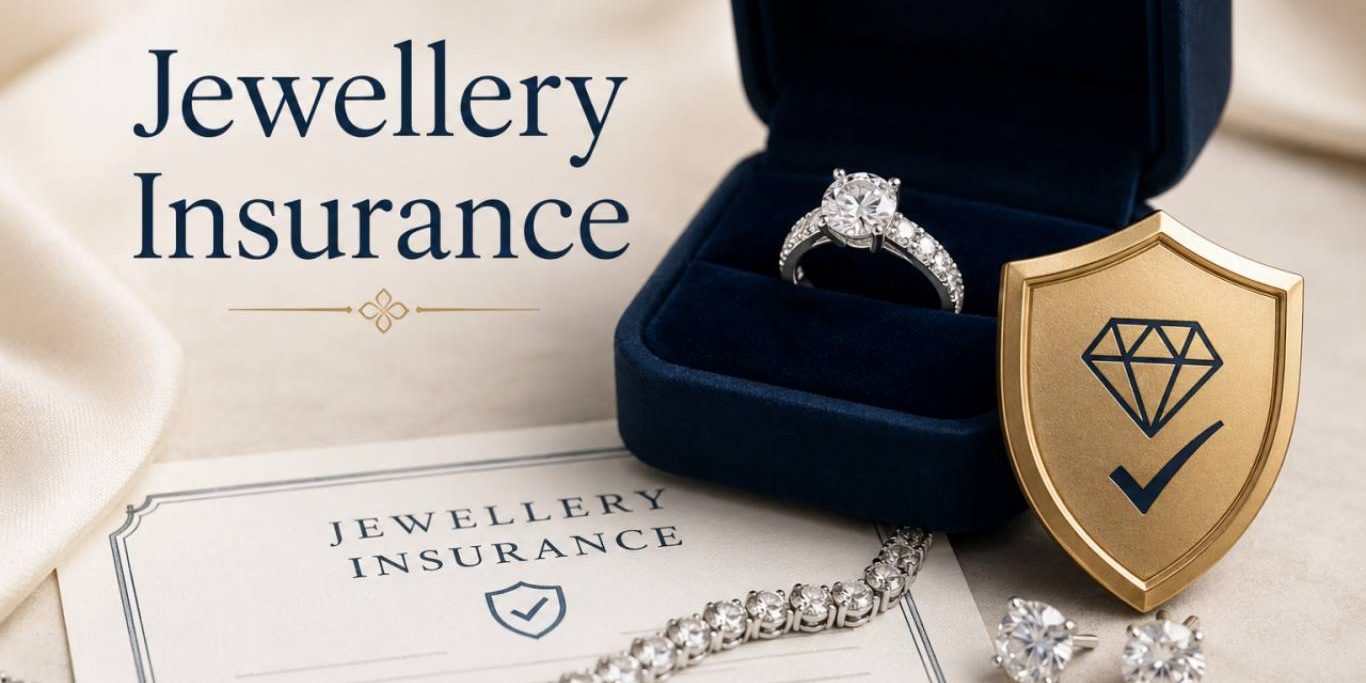
A treasured ring carries far more than its market value. It holds a proposal, a milestone, a family story. At Ordekian Jewellery, we have seen how quickly that story can be disrupted by theft or loss. Insuring your pieces properly is a quiet act of care, and arranging it is far simpler than most people expect.
Key Takeaways
- Jewellery is among the most commonly stolen household items.
- Standard contents policies often cap individual item cover.
- A certified valuation is essential proof of value.
- Revalue every two to three years as prices shift.
Why Insuring Your Jewellery Matters
The risk is neither rare nor abstract. Figures from the Australian Bureau of Statistics show that in the most recent break-in, 69 per cent of affected households had property stolen, with personal items such as jewellery and clothing among the most common losses. Rings and necklaces are small, portable and easily converted to cash, which places them squarely in a thief’s line of sight.
Theft is only one scenario. A stone can loosen and disappear during a swim. A bracelet can slip from a wrist at the beach. A chain can be damaged beyond repair in a house fire. Insurance does not restore sentiment, but it does ensure that a cherished piece can be faithfully remade rather than mourned twice.
Value is also moving quickly. The CSIRO notes that gold prices reached record highs in early 2026 amid global uncertainty. A ring valued several years ago may now cost considerably more to replace, and an outdated figure on your policy leaves you carrying the difference.
Consider a simple example. A gold and diamond band insured for four thousand dollars a decade ago might cost well beyond that to recreate today, once metal, stones and labour are accounted for. The policy still pays. It simply pays the old figure. The shortfall lands with the owner, at precisely the moment they can least absorb it.
The Underinsurance Trap
Many Australians believe they are covered when they are not. Research commissioned by the Australia Institute found that 19 per cent of homeowners say their contents are underinsured, while a further 10 per cent hold no contents cover at all. Academics writing in The Conversation have described underinsurance as a widespread problem across middle Australia, not merely an issue of affordability.
The Insurance Council of Australia points out that guessing replacement costs is a leading cause of shortfalls at claim time. Industry reporting adds that roughly one third of policyholders estimated their sum insured rather than establishing it properly. With jewellery, guessing is particularly costly, because craftsmanship and stone quality vary enormously between pieces that look alike.
What Standard Policies Often Miss
Home contents insurance rarely treats jewellery generously. Most policies apply a limit to any single unspecified item, and that limit is frequently well below the worth of an engagement ring. Cover away from the home may also be excluded unless you request it.
Before you assume you are protected, check the following:
- The maximum payable for one unspecified item.
- Whether accidental loss is covered, not only theft.
- Whether pieces are covered outside the home and overseas.
- The total limit applied to all valuables combined.
- Whether you may nominate your own jeweller for repairs.
Guidance from the Jewellers Association of Australia notes that some specialist policies allow you to nominate a preferred jeweller in the event of a claim. For a bespoke piece, this matters a great deal. Only the maker who shaped it truly understands how it was built.
How to Arrange Cover Properly
The process is orderly and worth doing once, carefully.
- Obtain a certified valuation for each significant piece.
- Photograph every item clearly, including hallmarks and settings.
- Store certificates, receipts and images securely, with digital copies.
- Specify high value pieces individually on your policy.
- Review and revalue every two to three years.
Valuation is the foundation. The National Council of Jewellery Valuers advises that items be reassessed every two or three years so the valuation remains current, and warns that without proof of true value, an insurer is unlikely to provide full compensation. A valuation certificate also serves as proof of ownership should a stolen piece be recovered.
Not all valuers are equal. In Australia there is no legal requirement for formal qualifications, so the credential matters. A registered valuer examines each stone with proper equipment, records the metal weight and setting detail, and states the market the valuation refers to. That written description becomes the blueprint from which a lost piece can be rebuilt.
Documentation and sensible storage strengthen any claim. Jewellery storage solutions like safes, travel cases and everyday habits such as jewellery care and maintenance, helps you spot a worn claw before a stone is lost. Insurers look kindly on owners who can demonstrate diligence.
Every piece of custom made jewellery we craft is accompanied by a certified valuation, and we can arrange valuations for existing items on request. Because we hold the original design records, remaking a lost piece remains genuinely possible.
Conclusion
Insurance cannot restore a memory, though it can ensure a treasured piece is faithfully recreated rather than lost forever. Accurate valuations, clear records and the right policy make all the difference. To arrange a certified valuation or discuss protecting your collection, contact us and speak with our master jeweller Mihran.
FAQs:
Does home contents insurance cover jewellery?
Usually, yes. However, most home contents insurance policies apply single-item limits, so high-value jewellery should be listed separately on your policy.
Do I need a valuation to insure my jewellery?
Yes. Insurers generally require a certified valuation as proof of value before approving a full replacement claim for high-value jewellery.
How often should jewellery be revalued?
Jewellery should generally be revalued every two to three years, as precious metal and gemstone values can change with market conditions.
Is my ring covered if I lose it overseas?
It may be covered if your insurance policy includes away-from-home or worldwide cover. Check your policy before travelling with valuable jewellery.
What documents help support a jewellery claim?
A jewellery claim is typically supported by a valuation certificate, purchase receipts, clear photographs, and a police report if the item was stolen.
Can I choose my own jeweller for a claim?
Some specialist insurance policies allow you to choose your preferred jeweller. Confirm this option with your insurer before purchasing or renewing your cover.